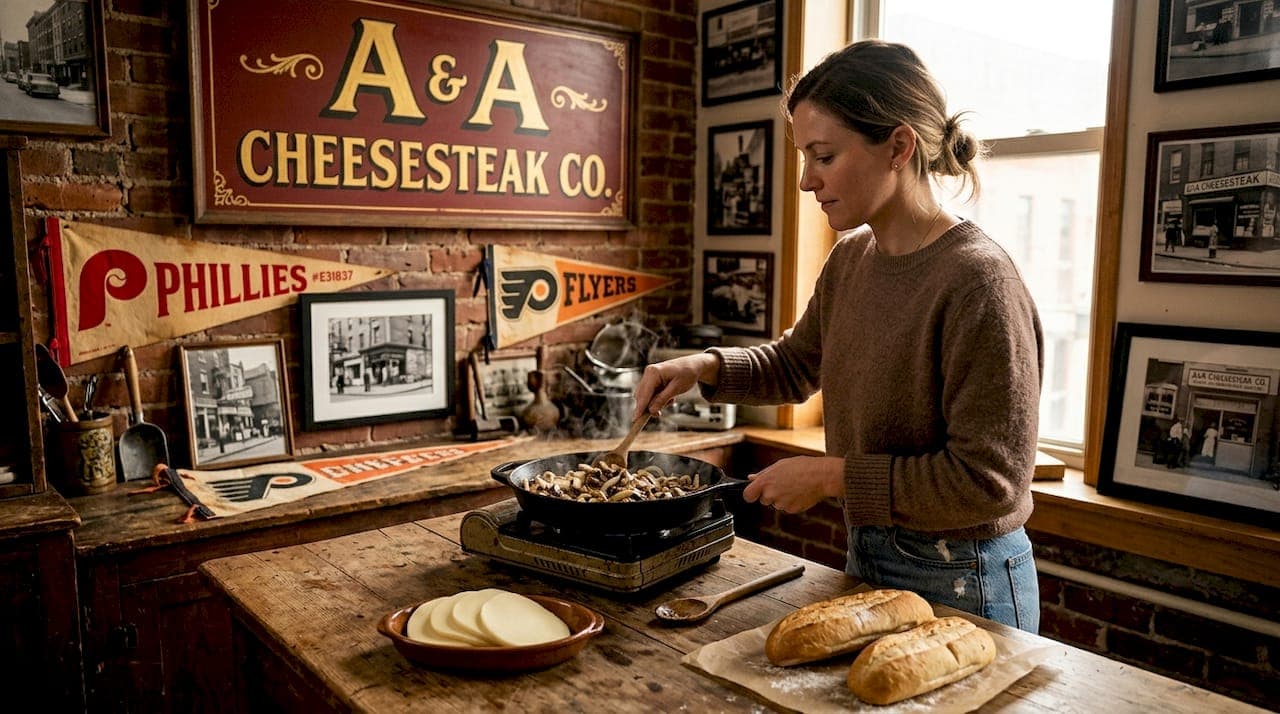
Most people assume a cheesesteak means beef, full stop. But the mushroom cheesesteak variation has quietly become one of the most talked-about twists on the classic Philadelphia sandwich, and for good reason. Mushrooms bring a deep, savory richness that holds its own against melted cheese and toasted hoagie rolls. Whether you want to stretch your beef further, skip the meat entirely, or just add a new layer of flavor, understanding what a mushroom cheesesteak variation actually is will change the way you think about this iconic sandwich.
Table of Contents
- Key takeaways
- What is a mushroom cheesesteak variation, exactly?
- Cooking techniques that build real flavor
- Creative variations beyond the standard sandwich
- Choosing the best mushrooms and cheese
- How to make a mushroom cheesesteak at home
- My honest take on the mushroom variation
- Try a real cheesesteak experience at Aacheesesteaks
- FAQ
Key takeaways
| Point | Details |
|---|---|
| Mushrooms as a flavor upgrade | Cremini, portobello, and oyster mushrooms add earthy umami that complements or replaces beef in cheesesteaks. |
| Cheese choice matters | Provolone, white American, and pepper jack each bring distinct flavor profiles that pair differently with mushrooms. |
| Faster prep than you think | A mushroom cheesesteak can come together in about 15 to 20 minutes, making it a practical weeknight option. |
| Beyond the sandwich | Stuffed portobello caps and casseroles are legitimate mushroom cheesesteak variations worth trying at home. |
| Flexible by design | Cheesesteaks are a customizable concept, so mushroom versions can be fully vegetarian or mixed with beef. |
What is a mushroom cheesesteak variation, exactly?
To understand the mushroom cheesesteak variation, you first need a clear picture of what a cheesesteak is. At its core, a cheesesteak is a long hoagie roll loaded with thinly sliced beef, melted cheese, and typically sautéed onions. Philadelphia claims it as a civic treasure, and the original version is built around ribeye steak cooked on a flat-top griddle.
The mushroom variation takes that same framework and either adds mushrooms alongside the beef or replaces the beef entirely. Cremini, button, and portobello mushrooms are the most common choices because of their earthy, umami-rich flavor and satisfying texture when cooked down. A standard mushroom cheesesteak recipe using 8 ounces of mushrooms typically yields 4 to 5 sandwiches, making it a practical option for feeding a small group.
What makes mushrooms genuinely interesting here is not just their flavor. It is their texture. Portobellos and oyster mushrooms have a fibrous, meaty bite that mimics the chew of thinly sliced beef more closely than almost any other vegetable. When you slice them thin and cook them hot, they develop browned edges and a concentrated savory depth that can fool even dedicated carnivores.
The variations of cheesesteaks involving mushrooms fall into three broad categories:
- Mushroom and beef blend: Mushrooms are added alongside thinly sliced ribeye or sirloin, adding bulk and flavor without replacing the meat.
- Fully vegetarian mushroom cheesesteak: Beef is removed entirely, with mushrooms carrying the full savory load, often supported by peppers and onions.
- Vegan mushroom cheesesteak: No animal products at all, using plant-based cheese and mushrooms seasoned to replicate the umami of beef.
Mushrooms add heartiness without heaviness, which is exactly why they work so well in a sandwich that is already rich with melted cheese and soft bread.
Cooking techniques that build real flavor
The biggest mistake home cooks make with mushroom cheesesteaks is treating mushrooms like a passive ingredient. Mushrooms need heat, space, and time to develop the kind of savory crust that makes a cheesesteak filling worth eating.
Start by slicing your mushrooms thin, around a quarter inch. Get your pan or griddle genuinely hot before adding any fat. If you crowd the pan, mushrooms steam instead of sear, and you lose the browned edges that carry most of the flavor. Cook them in batches if needed, and resist the urge to stir constantly.
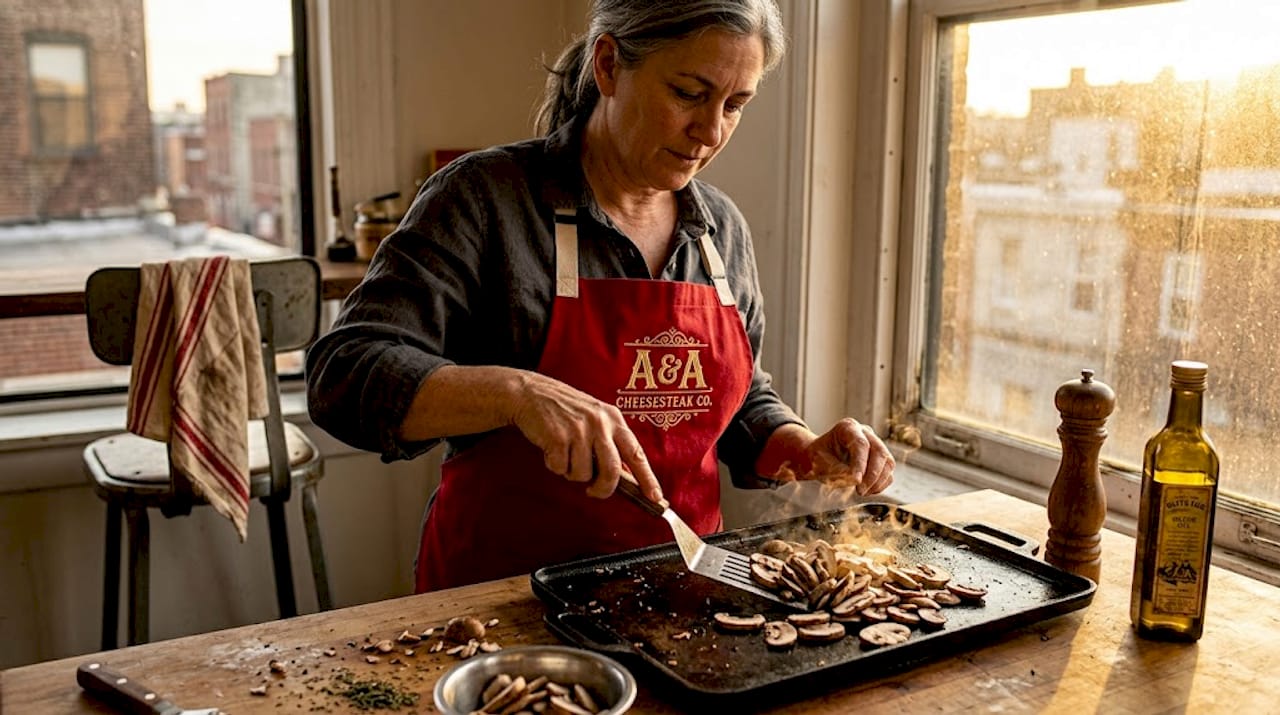
Home cooks season mushrooms with soy sauce, Worcestershire, and garlic powder to replicate the savory depth of beef, and the combination works remarkably well. Soy sauce in particular amplifies umami without making the filling taste Asian-fusion. It just tastes more like meat.
Here is a practical sequence for building flavor in your mushroom cheesesteak filling:
- Sauté sliced onions first over medium heat until they soften and begin to caramelize, about 8 minutes.
- Add bell peppers and cook for another 3 to 4 minutes until they soften.
- Push the vegetables to the side and add mushrooms in a single layer over high heat.
- Season with garlic powder, a splash of Worcestershire, and a small amount of soy sauce once mushrooms begin to brown.
- Combine everything, reduce heat, and layer your cheese on top to melt.
The whole process takes about 15 to 20 minutes from start to finish. For cheese, provolone delivers a sharp, tangy flavor that cuts through mushroom earthiness, while white American melts into a creamy blanket. Pepper jack is gaining serious traction for its bold heat, adding character that traditional cheeses simply do not.
Pro Tip: To keep your mushroom filling from turning watery, pat mushrooms dry with a paper towel before cooking and avoid adding salt until they are already browning. Salt draws out moisture, and adding it too early turns your sear into a steam.
Creative variations beyond the standard sandwich
Once you understand the core mushroom cheesesteak recipe, the format opens up in directions that go well past a hoagie roll. Cheesesteaks are more of a customizable concept than a rigid recipe, and that flexibility is where things get genuinely interesting.
Stuffed portobello mushroom caps flip the script entirely. Instead of mushrooms inside the sandwich, the mushroom becomes the vessel. You fill large portobello caps with sautéed onions, peppers, thinly sliced beef or a vegetarian substitute, and cheese. The key technique here: do not pre-roast the caps. Fill them raw, then roast briefly at 375°F to melt the cheese and soften the cap without losing its structure. Pre-roasting makes them collapse under the filling.
For moisture in stuffed versions, use a liquid-based cheese sauce inside the filling before adding shredded cheese on top. The sauce keeps the interior creamy while the top cheese browns and bubbles.
Cheesesteak casseroles are another direction worth exploring. Baked at 350 to 400°F for 18 to 25 minutes, these dishes combine mushrooms, beef or a plant-based substitute, peppers, onions, and cheese in a baking dish. They serve 4 to 6 people and require significantly less active cooking time than making individual sandwiches.
Here is a quick comparison to help you decide which format fits your situation:
| Format | Cook time | Servings | Best for |
|---|---|---|---|
| Classic sandwich | 20 to 25 min | 4 to 5 | Weeknight meals, casual gatherings |
| Stuffed portobello caps | 25 to 30 min | 2 to 4 | Low-carb, dinner party presentation |
| Cheesesteak casserole | 40 to 50 min | 4 to 6 | Batch cooking, family meals |
Global spice additions work particularly well in casserole formats. Smoked paprika, cumin, or even a touch of harissa can shift the flavor profile without betraying the spirit of the dish.
Choosing the best mushrooms and cheese
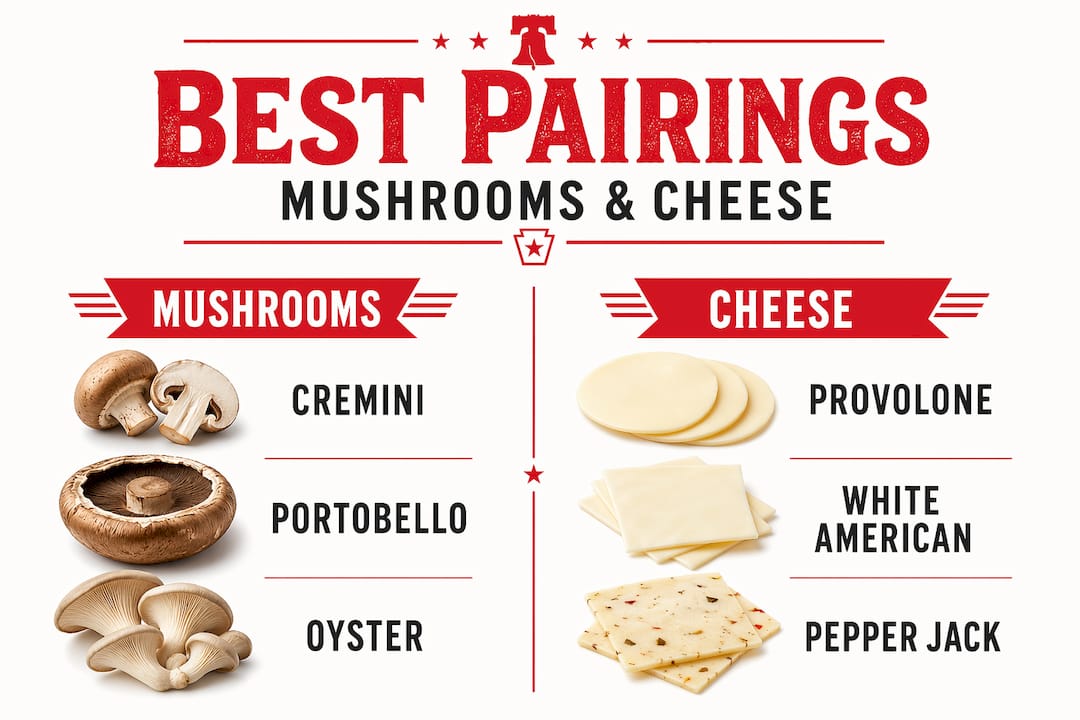
Not all mushrooms perform equally in a cheesesteak. The variety you choose determines the texture, flavor intensity, and how well the filling holds together in a roll.
- Cremini mushrooms: Firmer than white button mushrooms with a deeper, earthier flavor. They hold their shape well when sliced and cooked at high heat, making them the most reliable all-purpose choice.
- Portobello mushrooms: The meatiest option. Sliced thin, they produce long, fibrous strips that genuinely mimic beef. Best for fully vegetarian versions where you need maximum substance.
- Oyster mushrooms: Delicate and slightly sweet, with a texture that shreds easily. They work best in mixed beef-and-mushroom versions where you want flavor complexity rather than bulk.
- Button mushrooms: Mild and widely available, but they release a lot of water when cooked. Use them only if you cook them down long enough to evaporate that moisture.
On the cheese side, the choice is not just about taste. It is about meltability and how the cheese interacts with the moisture in the mushroom filling. White American melts the most smoothly and creates that classic gooey pull. Provolone holds its shape slightly more and adds a tang that brightens the earthy filling. Pepper jack brings heat that works especially well with oyster mushrooms.
Pro Tip: If you want the best of both worlds, layer provolone directly on the hot filling first to melt into the mushrooms, then add a thin slice of white American on top for the creamy pull when you bite in.
How to make a mushroom cheesesteak at home
Here is a straightforward sequence for making the best mushroom cheesesteak at home, whether you go fully vegetarian or mix in some beef:
- Prep your ingredients. Slice 8 ounces of cremini or portobello mushrooms thin. Slice one medium onion and one bell pepper into strips. If using beef, slice ribeye or sirloin as thin as possible, ideally partially frozen for easier cutting.
- Heat your pan. Use a cast iron skillet or flat griddle over high heat. Add a neutral oil with a high smoke point.
- Cook the onions and peppers first. Sauté over medium heat for 8 to 10 minutes until soft and lightly caramelized. Set aside.
- Sear the mushrooms. Add mushrooms in a single layer over high heat. Do not stir for the first 2 minutes. Season with garlic powder, Worcestershire, and soy sauce once they start to brown.
- Combine and season. Mix mushrooms with onions and peppers. If using beef, cook it separately and combine at this stage. Taste and adjust salt.
- Melt the cheese. Lay slices of provolone or white American directly over the filling and cover the pan briefly to melt.
- Load the roll. Use a lightly toasted hoagie roll. Scoop the filling in generously and serve immediately.
For a vegan mushroom cheesesteak, swap the Worcestershire for a vegan version, skip the beef, and use a plant-based cheese that melts well. Cashew-based cheeses and vegan pepper jack both work better than most shredded vegan cheese blends.
My honest take on the mushroom variation
I have eaten a lot of cheesesteaks, and I will tell you plainly: the mushroom version is not a consolation prize for people avoiding beef. It is a genuinely different eating experience that has its own strengths.
What I have found through experimenting is that the mushroom cheesesteak actually teaches you more about flavor building than the beef version does. Beef carries so much inherent richness that you can get away with lazy seasoning. Mushrooms demand that you understand umami, moisture control, and heat management. When you nail it, the result is a sandwich that is deeply savory, texturally satisfying, and not at all heavy.
The misconception I hear most often is that a non-beef cheesesteak is somehow less authentic or less serious. That framing misses the point. The spirit of the cheesesteak is a hot, cheesy, satisfying sandwich on a good roll. Mushrooms deliver that. Stretching 12 to 14 ounces of beef with mushrooms to yield one or two extra sandwiches without losing heartiness is also a genuinely smart move for anyone cooking for a crowd on a budget.
My advice: try the mushroom-and-beef blend first before going fully vegetarian. It gives you a reference point, and most people are surprised by how much the mushrooms improve even a traditional beef cheesesteak.
— Adam
Try a real cheesesteak experience at Aacheesesteaks
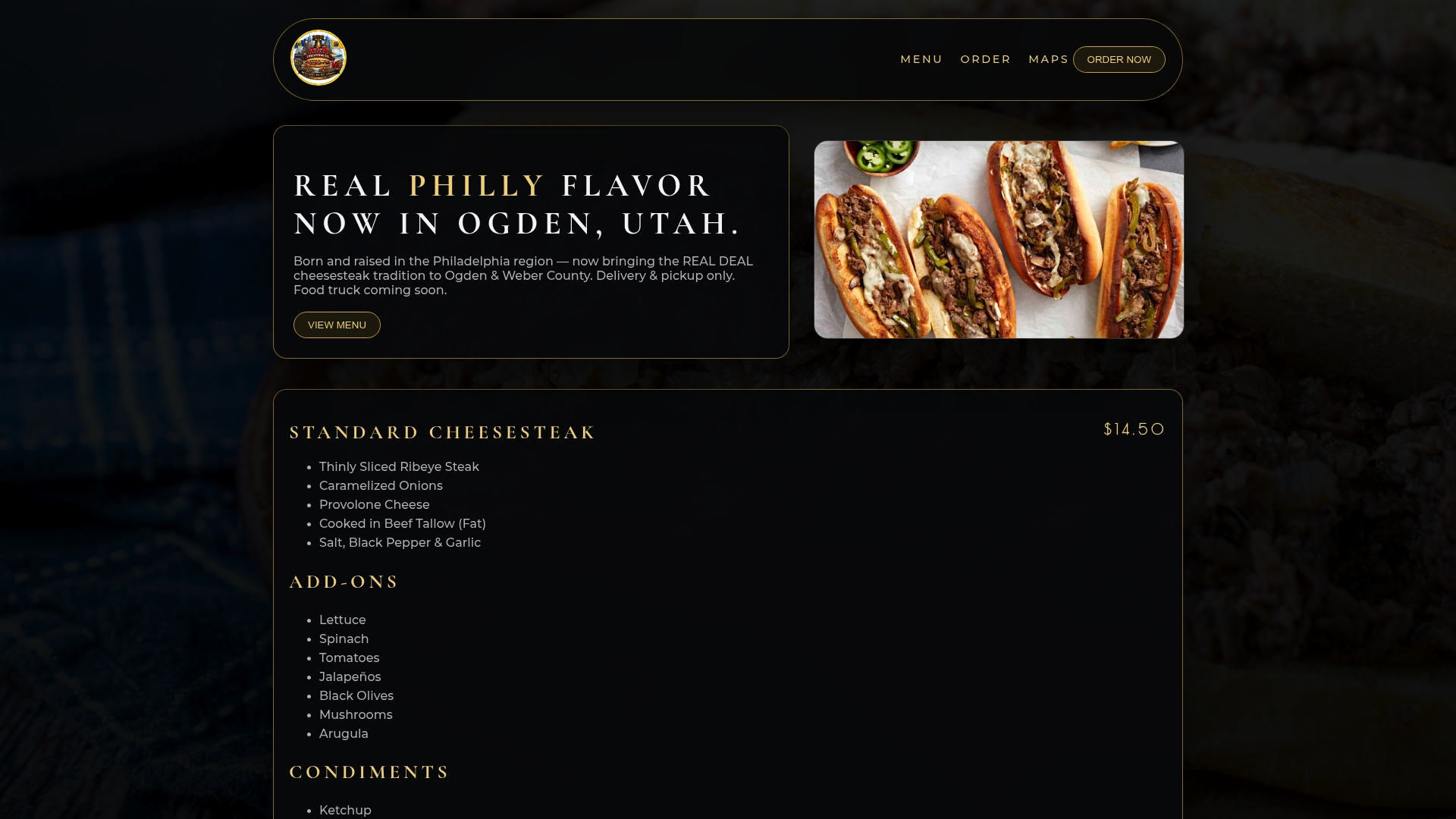
If reading through all of this has made you hungry for the real thing, Aacheesesteaks in Ogden, Utah, is worth your attention. The kitchen is built around authentic Philadelphia preparation, using thinly sliced ribeye and provolone cooked in beef tallow, the kind of detail that separates a genuine cheesesteak from a fast-food imitation. The menu includes customizable options that let you add mushrooms and other toppings to build exactly the sandwich you want. Whether you are picking up or ordering for delivery, explore the full menu and see what a properly made cheesesteak actually tastes like. Sometimes the best way to understand a variation is to start with the original done right.
FAQ
What is a mushroom cheesesteak variation?
A mushroom cheesesteak variation is a version of the classic Philly cheesesteak that incorporates sautéed mushrooms, either alongside thinly sliced beef or as a full replacement, to add earthy umami flavor and a meaty texture to the sandwich.
What mushrooms work best in a cheesesteak?
Cremini and portobello mushrooms are the top choices because of their firm texture and deep, savory flavor. Oyster mushrooms work well in mixed beef-and-mushroom versions for added complexity.
Can you make a vegan mushroom cheesesteak?
Yes. A vegan mushroom cheesesteak uses portobello or oyster mushrooms seasoned with soy sauce and Worcestershire, paired with plant-based cheese that melts well, all served on a hoagie roll without any animal products.
What cheese goes best with mushroom cheesesteak?
Provolone, white American, and pepper jack are the three most popular choices. Provolone cuts through mushroom earthiness with its tang, white American melts creamily, and pepper jack adds bold heat.
How long does it take to make a mushroom cheesesteak?
A standard mushroom cheesesteak recipe takes about 15 to 20 minutes from start to finish, making it faster than most weeknight dinner options while still delivering a genuinely satisfying result.